
How to Safely Store E-Bike Batteries During Winter: Voltage, Temperature, and Health Checks
Preserving capacity in off-season: Storing at 50%-60% charge, room temperature storage, and avoiding parasitic BMS drain.
Why Storing a Battery at 100% or 0% Destroys Cell Capacity
Storing a lithium battery fully charged at 100% (4.20V per cell) places maximum mechanical stress on the internal cathode lattice, accelerating electrolyte oxidation and causing permanent capacity loss. Storing a battery empty at 0% allows the BMS parasitic idle draw to slowly pull cell voltage below the critical 2.5V threshold, causing copper shunts to dissolve and bricking the battery permanently.
The Optimal 50% to 60% Storage Voltage Sweet Spot
For off-season storage, discharge or charge your battery to roughly 50% to 60% capacity (nominal 3.70V to 3.85V per cell). For a standard 48V battery pack (13S configuration), this corresponds to an open-circuit resting voltage between 48.0V and 50.0V. At this resting potential, chemical degradation is minimized.
Temperature Guidelines: Never Store in Freezing Garages
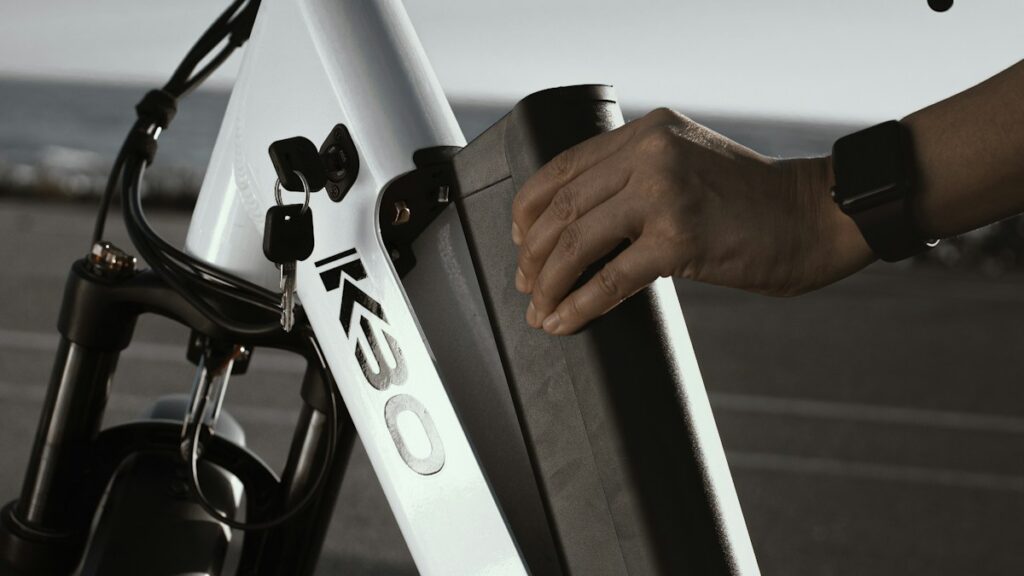
While lithium batteries can be discharged in cold weather, storing them in unheated freezing garages subjects cell seals to thermal contraction and internal moisture condensation. Always remove the battery from your e-bike frame and store it indoors at a stable room temperature between 10°C and 20°C (50°F to 68°F).
Technical Specifications & Reference Matrix
| Pack Nominal Voltage | 100% Full Voltage (Do Not Store) | Ideal Storage Voltage (50-60%) | Empty Cutoff (Danger Zone) |
|---|---|---|---|
| 36V System (10S) | 42.0 Volts | 37.0V – 38.5 Volts | < 30.0 Volts |
| 48V System (13S) | 54.6 Volts | 48.0V – 50.0 Volts | < 39.0 Volts |
| 52V System (14S) | 58.8 Volts | 51.8V – 53.5 Volts | < 42.0 Volts |
| 72V System (20S) | 84.0 Volts | 74.0V – 76.5 Volts | < 60.0 Volts |
💡 Expert Field Recommendation
Set a calendar reminder to check the battery voltage with a multimeter or battery LED indicator once every 60 days during winter. If the charge drops below 40%, top it back up to 55% for 30 minutes to counteract slow BMS parasitic drain.
Diagnostic Troubleshooting Checklist
- Battery will not take a charge in spring after winter storage: The BMS entered deep sleep or low-voltage lockout because voltage dropped below 2.8V per cell. Take it to a certified repair shop with bench power supply recovery capabilities.
Frequently Asked Questions
Can I ride my e-bike in freezing sub-zero winter temperatures?
Yes, riding in the cold is safe because discharging generates internal cell warmth. However, you must bring the battery indoors and let it warm up to room temperature for at least 2 hours before plugging it into a charger!
Article researched and verified by Klaus Richter, dedicated technical specialist and editorial contributor.